
9 Days Kilimanjaro
Experience a longer Kilimanjaro adventure with more time for acclimatization, changing landscapes and a carefully paced journey toward Uhuru Peak at 5,895 metres.
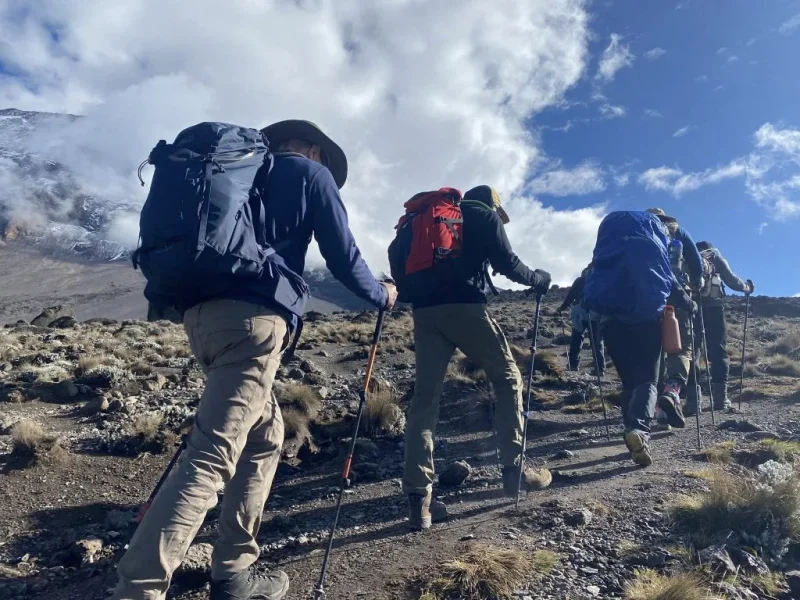
Two 9-Day Kilimanjaro Routes
A 9-day trek gives you more time on the mountain. Choose between the scenic Lemosho Route and the longer Northern Circuit Route.
Lemosho Route
Begin on the western side of Kilimanjaro and travel through changing landscapes toward the high mountain zone and Uhuru Peak.
Northern Circuit Route
Explore the northern side of Kilimanjaro through a longer route designed around gradual altitude gain, varied scenery and more time on the mountain.
Not sure which 9-day route fits your plans?
Get a Free Quote →What to Expect on a 9-Day Kilimanjaro Trek
Nine days allow you to experience the mountain at a steady pace, with time to adapt to changing altitude, terrain and weather as you move toward the summit.
Begin in the Lower Landscapes
Your trek begins in the lower mountain environment, where forest scenery and changing vegetation introduce you to the Kilimanjaro landscape.
Gain Altitude Gradually
The longer itinerary provides more time for a gradual ascent, allowing your body to adjust as the trail moves into higher mountain terrain.
Experience Changing Landscapes
As you climb higher, the environment changes from forest and moorland to alpine desert and the dramatic high-altitude summit zone.
Prepare for Summit Day
Before the summit attempt, your guides help you prepare for the demanding final ascent, with attention to pace, hydration, rest and changing mountain conditions.
Your 9-Day Kilimanjaro Journey
A 9-day trek provides time to move steadily through different mountain zones, acclimatize and prepare for the final summit attempt.
Begin the Mountain Journey
Start the trek through the lower mountain environment and gradually enter the first stage of your Kilimanjaro adventure.
Continue Through Changing Terrain
Continue higher as the vegetation and scenery begin to change, maintaining a comfortable walking pace with your mountain crew.
Gain More Altitude
Move into higher mountain terrain while allowing your body additional time to adjust to the increasing elevation.
Continue Into the High Mountain Zone
The landscape becomes more rugged as you approach the higher sections of the mountain and continue following the selected route.
Acclimatize and Move Higher
Continue gaining elevation while balancing walking, rest, hydration and careful monitoring of how you are responding to altitude.
Enter the Summit Zone
Reach the high-altitude sections of Kilimanjaro and prepare physically and mentally for the final summit stage.
Prepare for Summit Night
Rest and prepare for the demanding summit attempt, with your guides checking your condition and discussing the next stage.
Summit Attempt and Descent
Begin the summit attempt toward Uhuru Peak at 5,895 metres, then descend to a lower camp for recovery and rest.
Complete the Descent
Continue descending through lower elevations and complete your Kilimanjaro trek before returning from the mountain.
Route-Specific Itinerary
The exact camps, daily distances, walking times and terrain differ between the Lemosho Route and Northern Circuit Route. Your final itinerary will be confirmed according to the route selected and mountain conditions.
Where You Sleep on a 9-Day Kilimanjaro Trek
Accommodation on the mountain is designed around the selected route, with mountain camps providing a simple and practical base for rest, meals and preparation for the next stage.
Comfortable Rest After Each Trekking Day
Trekkers generally stay in designated mountain camps along the Lemosho and Northern Circuit routes. Your tent becomes your base while the mountain crew prepares meals and supports the daily trek.
Two Ways Up Kilimanjaro
Lemosho Route
Mountain camps are used throughout the trek as you progress from the western approach toward the summit zone.
Northern Circuit Route
The longer northern journey uses mountain camps while following its extended route around Kilimanjaro.
Please note: Exact camp names and locations depend on the route and final itinerary. Mountain camping is different from hotel accommodation, and facilities are basic compared with those at lower elevations.
Take Your Time. Climb Safely.
A 9-day Kilimanjaro trek gives you more time on the mountain, allowing the journey to be approached at a steady pace while your guides monitor your condition throughout the ascent.
Walk at a Comfortable Pace
Maintaining a steady pace helps conserve energy and allows you to focus on the changing altitude and terrain.
Give Your Body Time
The longer itinerary provides additional time at different elevations, supporting a gradual approach toward the summit.
Hydration & Nutrition
Drink regularly and maintain your energy with the meals and fluids provided throughout the mountain journey.
Guide Monitoring
Your mountain guides monitor how you are responding to altitude and can adjust the pace or daily plan when necessary.
Rest & Recovery
Rest is an important part of high-altitude trekking. Use camp time to eat, hydrate, recover and prepare for the next day.
Safety Comes First
If you develop concerning symptoms, tell your guide immediately. Your safety takes priority over continuing the ascent.
Altitude Can Affect Anyone
Previous hiking experience does not guarantee that you will avoid altitude-related problems. Report symptoms early and follow the instructions of your mountain guides.
What’s Included in Your 9-Day Kilimanjaro Trek
Your mountain package is designed to provide the essential support needed for a safe and organized journey from the trailhead to the summit and back down the mountain.
Professional Mountain Guides
Experienced mountain guides lead the trek, manage the daily schedule and monitor your progress throughout the journey.
Mountain Crew
A supporting mountain crew helps with camp operations, equipment, meals and other essential services during the trek.
Park & Conservation Fees
Applicable Kilimanjaro National Park entry, conservation and camping fees are included according to the selected package.
Mountain Accommodation
Accommodation in mountain camps is arranged along the selected Lemosho or Northern Circuit itinerary.
Mountain Meals
Meals are prepared during the trek to help provide the energy needed for the long days on the mountain.
Trek Safety Support
Your mountain team provides guidance and support throughout the ascent, including monitoring your condition at altitude.
Items That May Be Separate
Airport transfers, hotel accommodation before or after the trek, personal trekking equipment, travel insurance, tips and optional services may be separate depending on your selected package. Your final quotation will clearly show what is included and excluded.
What to Pack for a 9-Day Kilimanjaro Trek
Pack for changing temperatures, wet conditions and cold summit weather while keeping your personal gear practical and manageable.
Essential Trekking Gear
Clothing & Layers
Moisture-wicking base layers, trekking trousers, fleece or insulating layers, a warm jacket, waterproof jacket and waterproof trousers.
Footwear
Comfortable broken-in hiking boots, trekking socks and lighter footwear for use around camp.
Summit Clothing
Warm insulated jacket, thermal layers, warm gloves, hat or balaclava and other cold-weather protection for summit night.
Personal Essentials
Headlamp, sunglasses, sunscreen, water bottles or hydration system, toiletries, personal medication and basic first-aid items.
Before You Leave
Pack Smart, Not Heavy
A 9-day trek involves several days on the mountain, so focus on versatile layers and essential equipment rather than unnecessary items. Your mountain team can advise you on the practical packing requirements before departure.
Summit Day & Uhuru Peak
Summit day is the defining stage of your Kilimanjaro journey. After days of gradual ascent and preparation, you begin the final climb toward Uhuru Peak at 5,895 metres.
Early Start
The summit attempt normally begins very early, when the mountain is cold and conditions can change quickly.
Steady Progress
Your guides set a manageable pace, with breaks as needed while you continue through the high-altitude terrain.
Descent & Recovery
After the summit attempt, you descend to a lower elevation and continue with recovery before completing the trek.
The highest point of Mount Kilimanjaro and the summit objective for trekkers on both the Lemosho and Northern Circuit routes.
Reaching Uhuru Peak cannot be guaranteed. Altitude, weather, individual response and mountain conditions can affect the summit attempt. If your guide determines that continuing is unsafe, descending is the priority.
Who Is the 9-Day Trek For?
A 9-day Kilimanjaro itinerary offers more time on the mountain, making it suitable for travellers who want a gradual and carefully paced trekking experience.
Travellers Seeking More Time
The nine-day schedule gives you more days to experience the mountain rather than rushing through the ascent.
Travellers Focused on Acclimatization
More time on the mountain can allow for a gradual ascent, with rest and adjustment incorporated into the overall journey.
Active Travellers
The trek is physically demanding and requires regular walking, endurance and preparation for long days at high altitude.
Travellers Choosing Between Two Routes
You can choose between the Lemosho Route and Northern Circuit Route depending on your preferred trekking experience and itinerary.
Lemosho or Northern Circuit?
Both provide a longer Kilimanjaro experience, but their landscapes, route profiles and camp locations differ.
Frequently Asked Questions
Helpful answers about the routes, accommodation, preparation, altitude and summit experience on a 9-day Kilimanjaro trek.
Which routes are available for 9 days? +
Is a 9-day trek suitable for beginners? +
Where do I sleep during the trek? +
What is the elevation of Uhuru Peak? +
What happens if I feel unwell at altitude? +
What should I pack for 9 days? +
Can I choose between Lemosho and Northern Circuit? +
Can the itinerary change during the trek? +
Still Have Questions?
Ask About Your Trek →Tell us your preferred route, travel dates and group size, and we will help you plan your Kilimanjaro trek.