
8 Days Kilimanjaro
Take eight days to experience Mount Kilimanjaro through scenic landscapes, gradual altitude gain and a memorable journey toward Uhuru Peak at 5,895 metres.
Choose Your 8-Day Kilimanjaro Route
Eight days gives you more time on the mountain, with four route options offering different landscapes, terrain and trekking experiences.
Machame Route
A scenic route with varied terrain, changing landscapes and an extended journey toward the summit.
View Machame Route →Lemosho Route
A western approach with scenic landscapes, diverse terrain and more time to experience the mountain gradually.
View Lemosho Route →Rongai Route
A northern approach with open landscapes, distinctive scenery and a quieter trekking experience.
View Rongai Route →Northern Circuit Route
A longer northern journey designed around gradual progression, expansive landscapes and more time on the mountain.
View Northern Circuit Route →Not sure which eight-day route fits your plans? Talk to our Tanzania team →
More Time to Experience Kilimanjaro
An 8-day Kilimanjaro trek gives you time to settle into the mountain environment, experience changing landscapes and prepare for the final ascent toward Uhuru Peak.
Start in Lower Landscapes
Begin through lower mountain terrain and gradually move into the changing ecological zones of Kilimanjaro.
Gain Altitude Gradually
Each trekking day takes you higher, allowing your body time to adjust as the mountain environment changes.
Prepare for Summit Day
The extended itinerary provides time to rest, manage your energy and prepare for the demanding final ascent.
Reach Uhuru Peak
Finish with the summit attempt toward Uhuru Peak at 5,895 metres, followed by the descent through the mountain.
Route matters. The exact experience differs between Machame, Lemosho, Rongai and Northern Circuit. Camps, daily distances, terrain and altitude profiles depend on the route and itinerary selected.
8-Day Kilimanjaro Itinerary
An 8-day trek allows a gradual journey through Kilimanjaro’s changing landscapes before the summit attempt. The exact camps, distances and daily schedule depend on the route selected.
Begin the Mountain Journey
Start from the selected route’s trailhead and enter the lower mountain environment. The day focuses on settling into the trekking rhythm and reaching the first overnight camp.
Continue Through Changing Terrain
Continue higher into the mountain while experiencing changes in vegetation, temperature and terrain. A steady pace helps conserve energy for the days ahead.
Gain More Altitude
Trek deeper into the high mountain environment. The route begins to feel more alpine as altitude increases and the landscape becomes more open.
Acclimatize and Move Higher
Continue toward the upper mountain with careful attention to pace, hydration and rest. Depending on the route, the day may include valuable altitude-gain and acclimatization opportunities.
Enter the Summit Zone
The landscape becomes increasingly rugged as you approach the higher camps. The focus is on maintaining energy and preparing physically and mentally for the summit attempt.
Prepare for Summit Night
Rest and prepare for the demanding summit section. Your guide reviews the next stage, while you organize essential layers, water and personal summit equipment.
Summit Attempt and Descent
Begin the summit attempt at the appropriate time and climb toward Uhuru Peak at 5,895 metres. After the summit section, descend to a lower camp for recovery.
Complete the Descent
Continue descending through the mountain’s lower ecological zones until reaching the route’s finishing point, where the Kilimanjaro trekking experience comes to an end.
Why the Itinerary Varies by Route
Machame, Lemosho, Rongai and Northern Circuit follow different approaches to Kilimanjaro. Their camp locations, daily hiking distances, terrain and acclimatization schedules are therefore not identical. Your final itinerary will be confirmed according to the route you choose.
Where You Sleep on the Mountain
Accommodation during an 8-day Kilimanjaro trek depends on the route you choose. Most routes use mountain camps, while the accommodation style and camp locations vary according to the itinerary.
Camping Under Kilimanjaro’s Sky
Machame, Lemosho, Rongai and Northern Circuit itineraries generally use designated mountain camps. After each trekking day, you return to camp to rest, eat and prepare for the next stage.
Mountain tents, sleeping equipment, prepared meals and support from the mountain crew.
Your Route Determines the Camps
Camp names, overnight locations and the number of nights at each camp are different for Machame, Lemosho, Rongai and Northern Circuit. Your detailed accommodation plan is confirmed with your selected route.
The focus is on practical mountain accommodation that supports rest, recovery and preparation for the next trekking day.
Accommodation by Route
Mountain camping along the southern approach.
Mountain camping across the western approach.
Mountain camping along the northern approach.
Mountain camping across the northern side of the mountain.
A Steady Approach to the Mountain
An 8-day trek gives you more time on the mountain, allowing the itinerary to progress gradually while your guide monitors your condition and response to altitude.
Walk at a Comfortable Pace
The mountain is approached steadily rather than rushed. Your guide sets a suitable pace for the group and allows regular opportunities to rest.
Give Your Body Time to Adjust
As altitude increases, the body needs time to adapt. The longer itinerary provides several trekking days before the summit attempt.
Hydration and Nutrition
Drinking regularly and eating well are important throughout the trek. Meals and hydration routines help maintain energy for each stage of the climb.
Guide Monitoring
Your mountain guides monitor how you are feeling during the trek. Any symptoms or concerns should be communicated immediately so the appropriate decision can be made.
Rest and Recovery
Rest becomes increasingly important at higher elevations. The daily schedule allows time to recover before continuing toward the summit.
Safety Comes First
Reaching the summit is never more important than your wellbeing. If altitude-related symptoms become concerning, your guide can recommend stopping, descending or seeking further assistance.
Important Altitude Reminder
Kilimanjaro is a high-altitude mountain. Altitude-related illness can affect anyone, regardless of fitness or previous trekking experience. Listen to your guide, report symptoms early and follow the safety instructions throughout the trek.
What’s Included in Your 8-Day Trek
Your Kilimanjaro experience includes the essential mountain services needed to support you from the trailhead to the summit and back down the mountain.
Professional Mountain Guides
Experienced local mountain guides lead the trek, manage the daily schedule and support you throughout the climb.
Mountain Crew
A dedicated mountain crew supports the trek with camp logistics, meals and essential mountain operations.
Park & Conservation Fees
Required Kilimanjaro National Park and conservation-related fees are included according to the selected trekking package.
Mountain Accommodation
Overnight mountain accommodation is arranged according to your chosen route, generally using designated mountain camps.
Mountain Meals
Meals are prepared during the trek to provide practical nutrition and energy for the demanding days on the mountain.
Safety & Trek Support
Your guides monitor the group throughout the trek and provide practical support for altitude, weather and changing mountain conditions.
Items to Confirm With Your Selected Package
Airport transfers, hotel accommodation before or after the trek, personal trekking equipment, travel insurance and optional services may depend on your chosen package. We confirm all inclusions and exclusions clearly before your booking.
What to Pack for 8 Days on Kilimanjaro
Packing for eight days on Kilimanjaro means preparing for changing temperatures, different mountain environments and a cold summit night. Pack practical layers and avoid unnecessary weight.
Layering for Changing Temperatures
Bring comfortable trekking clothes that can be layered as temperatures change throughout the climb.
- Moisture-wicking base layers
- Trekking trousers
- Warm fleece or mid-layer
- Waterproof jacket and trousers
- Warm summit jacket
- Warm hat and gloves
Comfortable, Reliable Footwear
Your footwear should be comfortable, well broken-in and suitable for long days on varied mountain terrain.
- Broken-in trekking boots
- Trekking socks
- Warm summit socks
- Light camp shoes or sandals
Small Items That Matter
Keep personal essentials organized and easily accessible during the trek.
- Headlamp with spare batteries
- Sunglasses
- Sunscreen and lip balm
- Water bottle or hydration system
- Personal toiletries
- Small personal first-aid items
Keep Important Documents Protected
Keep your essential travel documents secure and protected from moisture throughout the journey.
- Passport
- Travel insurance documents
- Emergency contact information
- Relevant medical information
- Small waterproof document pouch
Pack Smart, Not Heavy
Your route and trekking package determine which equipment is provided by the mountain crew and which items you need to bring personally. We recommend confirming the final equipment list before departure.
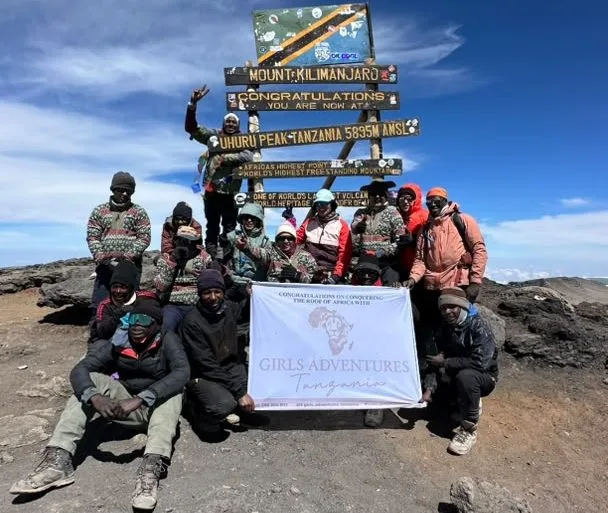
The Journey to Uhuru Peak
Summit day is the defining stage of your Kilimanjaro adventure. After preparing at the high mountain camp, you begin the final ascent toward Uhuru Peak at 5,895 metres.
The pace is deliberately steady, with your guides supporting the group throughout the ascent. Conditions can be cold and demanding, so patience, energy management and following your guide’s advice are important.
Uhuru Peak is the highest point of Mount Kilimanjaro and the summit destination for the trek.
Early Start
The summit attempt normally begins early, when the mountain is cold and conditions can change quickly.
Steady Progress
The climb is taken slowly and carefully. Your guide helps maintain an appropriate pace while monitoring how the group is coping.
Descent & Recovery
After the summit section, you descend to a lower elevation where you can rest and recover before continuing the journey.
Your wellbeing comes first. Summit success can never be guaranteed because altitude, weather and individual response to high elevation vary. If your guide determines that continuing is unsafe, descent is the appropriate priority.
Who Can Choose an 8-Day Kilimanjaro Trek?
An 8-day itinerary offers more time on the mountain and several route choices. It can suit travellers who want a gradual trekking experience with time to adapt to the altitude and changing terrain.
First-Time Kilimanjaro Trekkers
If this is your first Kilimanjaro experience, an 8-day itinerary gives you a longer period to settle into the rhythm of mountain trekking.
Travellers Seeking More Time
Eight days provide more time to experience the mountain rather than rushing through the journey toward the summit.
Active Travellers
The trek is suitable for people who are prepared for multiple consecutive days of hiking over changing terrain and at increasing altitude.
Travellers Comparing Routes
The 8-day option gives you a choice between Machame, Lemosho, Rongai and Northern Circuit, each offering a different mountain experience.
Choose the Route That Fits Your Journey
Machame, Lemosho, Rongai and Northern Circuit differ in scenery, terrain, approach and itinerary. We can help you understand the differences before you choose your route.
Questions About the 8-Day Trek
Here are answers to common questions about routes, accommodation, altitude, packing and the summit experience.
Which Kilimanjaro routes are available for 8 days?
Does an 8-day trek use mountain camps?
What is the elevation of Uhuru Peak?
Is an 8-day Kilimanjaro trek suitable for beginners?
What happens if I feel unwell at altitude?
What should I pack for the 8-day trek?
Can I choose my preferred route?
Can the itinerary change during the trek?
Machame · Lemosho · Rongai · Northern Circuit